
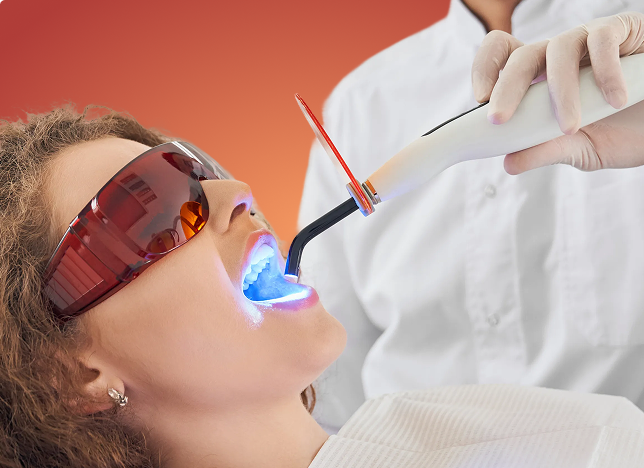
Few things brighten a first impression like a confident smile, so it’s no surprise that whiter teeth are one of the most requested cosmetic improvements. But when teeth look discolored, patients often aren’t sure which solution they actually need: professional whitening or veneers?
The right choice depends on what’s causing the discoloration in the first place. At Smile Studio 87 in Woodridge, Dr. Sumayyah Khan and Dr. Maja Sukovic help patients understand the difference so they invest in the treatment that will truly deliver the result they want. Here’s how the two compare.
Why Teeth Become Discolored
Not all stains are the same, and that distinction is the key to choosing between whitening and veneers.
Extrinsic stains sit on the surface of the enamel and are typically caused by coffee, tea, red wine, and tobacco. These respond well to whitening.
Intrinsic discoloration comes from within the tooth and can be caused by certain medications, trauma, or simply aging. These deeper color changes often don’t respond to whitening the way surface stains do.
The American Dental Association offers a helpful breakdown of why teeth change color:
https://www.mouthhealthy.org/all-topics-a-z/teeth-whitening
Professional Teeth Whitening: Best for Surface Stains
If your teeth are generally healthy and well-shaped but have dulled or yellowed over time, professional whitening is often the simplest and most cost-effective solution.
In-office whitening uses clinical-grade bleaching agents that are far stronger than store-bought options, lifting stains safely and quickly under professional supervision. It’s ideal for extrinsic stains and can dramatically brighten your smile without altering the structure of your teeth.
The trade-off: whitening doesn’t work on all types of discoloration, and it won’t change the shape, size, or alignment of your teeth. Results also aren’t permanent and can be maintained with touch-ups.
Learn about our whitening treatment here:
https://smilestudio87.com/sub-services/teeth-whitening/
Dental Veneers: Best for Deep or Complex Discoloration
When discoloration is intrinsic, or when it’s paired with other cosmetic concerns like chips, gaps, or misshapen teeth, veneers are often the better answer.
Veneers are custom-made, thin coverings bonded to the front surface of your teeth. As the ADA notes, veneers can improve the appearance of teeth that are stained, chipped or broken, or crooked or misshapen, and they can mask gaps in your smile. Because the color is built into the veneer itself, they address discoloration that whitening simply can’t reach.
One important consideration: veneer treatment is not reversible, since a small amount of enamel is usually prepared to place them. That’s why the ADA emphasizes seeing a licensed dentist for veneer services.
Read the ADA’s overview of veneers here:
https://www.mouthhealthy.org/all-topics-a-z/veneers
Explore our veneer options here:
https://smilestudio87.com/sub-services/dental-veneers/
Is There a Middle-Ground Option?
Sometimes. For patients with minor chips or discoloration who want a conservative fix, dental bonding can be a more affordable, less invasive alternative to veneers. During your consultation, your dentist can help you weigh bonding, whitening, and veneers based on your goals and budget.
See how dental bonding works here:
https://smilestudio87.com/sub-services/dental-bonding/
Which Is Right for You?
Here’s the simplest way to think about it: if your teeth are healthy and well-shaped but stained on the surface, whitening is likely your answer. If your discoloration is deep, or you want to correct shape and spacing at the same time, veneers offer a more complete transformation.
The best choice always comes down to a professional evaluation. Dr. Khan and Dr. Sukovic serve patients throughout Woodridge, Naperville, and the surrounding Illinois communities with personalized cosmetic guidance.
Meet our dentists:
https://smilestudio87.com/meet-our-dentist/
Ready to brighten your smile? Request a consultation:
https://smilestudio87.com/contact/
Frequently Asked Questions
Will teeth whitening work on all types of stains?
No. Whitening is most effective on extrinsic (surface) stains from foods, drinks, and tobacco. Intrinsic discoloration from medication, trauma, or aging often doesn’t respond well to whitening and may be better addressed with veneers.
Are veneers better than whitening?
Neither is universally “better”, they solve different problems. Whitening brightens healthy, well-shaped teeth with surface stains. Veneers correct deep discoloration and can also fix chips, gaps, and shape at the same time.
Is teeth whitening permanent?
No. Whitening results fade over time and can be maintained with periodic touch-ups, especially if you regularly consume staining foods and drinks.
Do veneers damage your natural teeth?
Veneer placement typically involves removing a small amount of enamel, which makes the treatment irreversible. This is why it’s important to have veneers placed by a licensed dentist after a thorough evaluation.